
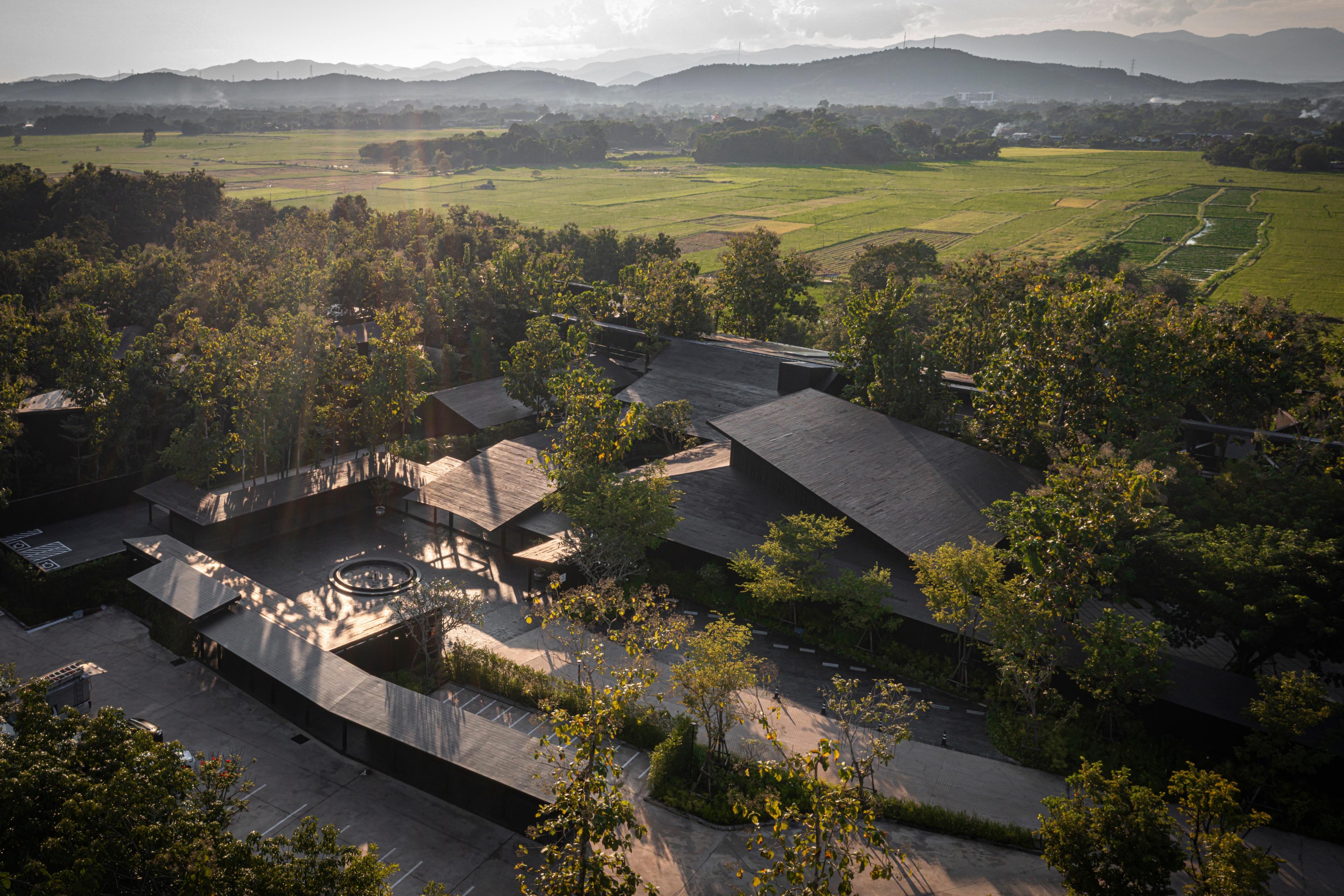
A family journey through Nan’s mountains and lush landscapes left a lasting impression on Sorravit Phanratanamongkol, eventually inspiring a hospitality project deeply connected to the province’s natural and cultural character. Today, Sataa Resort Nan reflects that original vision through thoughtful design, local heritage, and a genuine approach to hospitality.
The story of Sataa Resort Nan began not with a search for the next promising hospitality destination, but with a feeling. During a family trip, Cofounder and Managing Director Sorravit Phanratanamongkol, known as Mack, looked out over Nan Province from the air and found himself drawn to its mountains, greenery, and unhurried way of life. There was something about the landscape that stayed with him - a sense of calm and a connection to cultural roots that felt increasingly rare.
“I began to imagine creating somewhere people could genuinely step away from their routines, rather than simply travel to another destination,” he recalls.
That early impression would eventually become the foundation of Sataa Resort Nan, a retreat in Phu Phiang that does not seek to compete with the more established destinations of northern Thailand. Instead, it offers a different reason to travel: the opportunity to experience a place at a gentler pace, where the character of the destination is as much a part of the stay as the accommodation itself.
For Mack, Nan’s appeal has never been measured by the number of attractions visitors can fit into a day. Its quieter atmosphere, everyday traditions, architecture, and local food offer a more intimate encounter with northern Thai culture. “The attraction of Nan is not about how many places you can visit in a day. It is about how a place makes you feel when you allow yourself to slow down.”
This belief became a guiding principle in shaping Sataa, from the way its buildings sit within the landscape to the experiences offered to guests.
Letting the land tell its story
Set on the grounds of a former teak plantation, Sataa Resort Nan was developed with a clear intention: to preserve as much of the site's existing character as possible. Rather than clearing the land to accommodate a predetermined architectural vision, the team worked around many of the mature trees, allowing them to remain an integral part of the resort.
Working with Studio Miti on architecture and Choop Choo Jai on landscape design, the approach placed nature and the surrounding environment at the forefront. The buildings were carefully positioned around existing trees, even when doing so introduced greater complexity to planning and construction.
“The mature trees give the property a sense of character and permanence that would be difficult to recreate through landscaping alone,” Mack explains.
The same sensitivity extends to the resort's architectural language. Lanna influences appear in timber beams reminiscent of traditional boats, roof forms inspired by local houses, and openings that allow natural light and shadow to shape the atmosphere throughout the day. Rather than recreating the past as a decorative theme, the design allows traditional references and contemporary elements to coexist.
Timber that could not be retained from the original site was also given another purpose. Through a collaboration with Artslonga, reclaimed teak was transformed into bespoke art pieces, carrying traces of the land into the resort's interiors.
The result is a setting where the relationship between architecture, landscape, and material feels considered rather than imposed. Sataa does not attempt to overwhelm its natural surroundings, it creates space for guests to notice them.
Across its 27 rooms and four suite types, this philosophy takes different forms. The Upper Rice Terrace Suite looks out towards the surrounding rice fields, while the Hideaway Suite is nestled among the teak trees. The latter is Mack's personal favorite, not for its scale, but for the privacy and quiet connection with nature it offers.
Although guests may arrive with different expectations of a mountain retreat, the experience is not built around a packed itinerary or a constant programme of activities. Some may venture out to explore Nan's temples and communities, others may prefer to spend their time within the resort. Both are equally welcome.
As Mack puts it, “We want guests to feel more than know.”
A taste of Nan, shared at the table
A sense of place also finds its way into the dining experience at Pasaa Nan, the resort's restaurant, café and bar. Built around the idea that food is a universal language, the venue introduces guests to the culinary character of Nan through flavors shaped by local ingredients and traditions.
Nan cuisine is known for its lighter, gently sweet profile, with ingredients such as Ma-Kwaen offering distinctive aromatic and slightly tingling notes. For visitors encountering these flavors for the first time, the experience becomes an introduction to the province that goes beyond its scenery.
Mack believes regional cuisine can be made approachable without losing the qualities that make it distinctive. Presentation and the overall dining experience may be adapted to welcome different guests, but the identity of the ingredients, cooking traditions, and stories behind each dish should remain intact.
“A memorable meal should offer more than good food. It should leave guests with a greater understanding of the place they are visiting,” he says.
Importantly, Pasaa Nan also welcomes visitors who are not staying at the resort. In doing so, it creates another point of connection between Sataa and the wider community, allowing the experience of Nan to extend beyond the resort's boundaries.
Hospitality that belongs to its surroundings
For Mack, creating a resort in Nan also means recognizing that its success is closely connected to the people who call the province home. Building a hospitality team in a smaller destination brings different considerations from operating in a major tourism hub, particularly when the pool of candidates with international luxury hospitality experience is more limited.
Rather than relying solely on previous experience or familiar hotel backgrounds, Sataa places emphasis on attitude, willingness to learn, personal responsibility, and genuine care for others. Technical skills can be developed through training and guidance; a sincere approach to hospitality is harder to teach.
This philosophy reflects a wider belief that hospitality cannot simply be imported from elsewhere. The service experience, the people behind it, and the way a property engages with its surroundings all need to respond to the character of the destination.
“Sataa cannot succeed without Nan's people,” Mack has said.
That connection also informs how the resort views its place within the community. Respecting local culture, in his view, does not mean turning traditions into decorative features for visitors. It begins with understanding that the community has its own identity, independent of tourism, and that businesses have a responsibility to consider how their presence affects local life.
As Nan gradually attracts more attention, this perspective becomes particularly relevant. Mack believes the destination's strength lies precisely in the qualities that make it different, and that development should create opportunities for local people without diminishing the character of the place.
Recognition rooted in a sense of place
Sataa Resort Nan's approach to hospitality has earned it recognition as 2026 Asia's Finest Mountain Resort at the 2026 Asia Hospitality Awards. The distinction acknowledges a property whose appeal extends beyond its natural setting, bringing together thoughtful design, regional identity, and an experience shaped by a genuine understanding of its destination.
The resort is also listed in the MICHELIN Guide hotel selection, adding another point of recognition to its growing presence among travellers seeking distinctive stays in Thailand.
Yet, when considering what success should look like in the years ahead, Mack speaks less about expansion and more about continuity. His priority is to deepen what Sataa already offers, maintaining the quality of the guest experience, nurturing the team, and building lasting relationships with the local community.
For him, a successful hospitality destination should not have to sacrifice its identity to become commercially recognized. Nor should growth be measured simply by the number of rooms or visitors it can accommodate.
“If Nan becomes more popular, I hope it develops in a way that creates opportunities for local people while protecting the qualities that make the province distinctive,” he reflects.
It is a perspective that gives Sataa Resort Nan a significance beyond its role as a place to stay. The resort presents a way of thinking about mountain hospitality in which the destination is not merely a backdrop, local culture is not simply an aesthetic reference, and luxury is not defined by how much a property can offer, but by how thoughtfully it allows guests to experience what is already there.
More than anything, Mack hopes Sataa will be remembered for how it made people feel, rather than how large it became. Perhaps that is the essence of its hospitality philosophy: creating a space where travellers can reconnect with nature, encounter the character of Nan, and leave with something that cannot be captured in an itinerary alone.
As the 2027 Asia Hospitality Awards opens for entry, the awards continue to recognize establishments and professionals shaping the future of hospitality across Asia. Spanning 30 categories across Hotels, Resorts, Lifestyle & Wellness, Cruise & Yacht and Special Achievement, the programme invites the region's hospitality community to share the achievements, experiences, and ideas contributing to the industry's continued evolution.
PHOTO CREDIT: Sataa Resort Nan