Guests decide how they feel about a property almost immediately. Design the first five minutes for calm—and make the effect measurable for AHA 2026.
The hotels guests recommend most share a quiet superpower: they make people feel calm within minutes of arrival. It isn’t luck; it’s design and discipline. This piece breaks down how to stage a five‑minute window that lowers the pulse—and how to show the effect in a way AHA juries can read.
What guests feel: the case for calm
Arrival is a physiological moment. Light levels, noise, and visible order tell the nervous system whether to brace or breathe. When glare is softened, voices settle, and movement lines are clear, guests relax faster, conversations become easier, and service feels more human. Calm isn’t slower—it’s smoother.
Design moves that lower the pulse
- Control the 3–5 p.m. glare. Set a warm evening scene; use shading, curtains, or film where needed.
- Protect the voice. Add acoustic absorption around check‑in and conversation areas so staff can speak gently and be heard. Keep sightlines honest. From the desk, read the door, elevators, and seating in one glance to anticipate needs.
- Invite unhurried waiting. Angle seating toward natural light; keep routes clean; avoid visual clutter and hard reflections.
- Let the plan explain itself. Clear thresholds and intuitive wayfinding reduce friction without more signage.
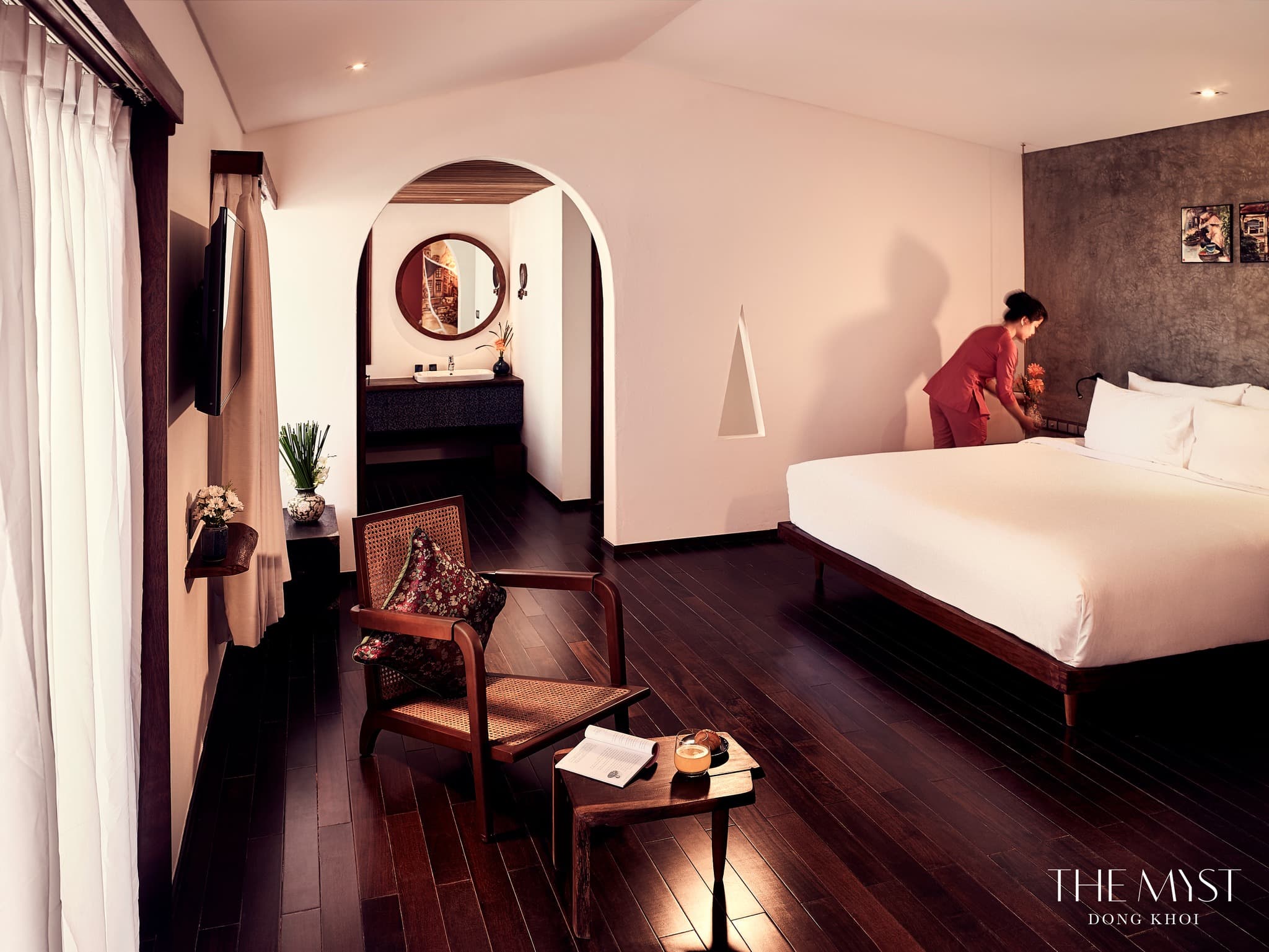
AHA 2025's Finest Boutique Hotel - TheMyst
Service rituals that make the design work
- Greeting radius. Step forward within two meters; offer concise reassurance (“We’ve got you; please take a seat, I’ll handle the rest”).
- Arrival triage. Prioritise families, long‑haul travellers, and special‑needs guests; redirect others to a comfortable holding point.
- The first sip. Water or tea offered immediately—small care that reads big.
- Queue choreography. One smooth line; visible progress; seated check‑ins for those who need it.
- Micro‑briefs. Staff share live cues at shift change: expected peaks, flight delays, group arrivals.
- Silent recovery. If something goes wrong, fix the cause before apologies; let the environment do the calming. AHA 2025's Finest Boutique Hotel - TheMyst
Measure what matters (for AHA evidence)
- Time‑to‑Calm: observable time (or short post‑arrival poll) until guests report feeling settled.
- Escalation Rate: share of check‑ins needing manager intervention at peak hours.
- Review Language: increase in words like smooth, calm, quiet, easy, effortless.
- Peak‑hour snapshots: quick dB and lux readings at reception and seating.
- Dwell & Flow: average dwell in the waiting zone and time to complete check‑in (without rushing conversation).
Why this wins with AHA
AHA rewards service you can feel and evidence you can show. Arrival calm sits at the intersection of Authenticity (place‑sensitive cues), Guest Satisfaction (settled guests, kinder reviews), Online Presence & Engagement (UGC that looks relaxed, not staged), Quality of Service (coaching, not scripts), and CSR (low‑impact solutions like glare control and acoustic treatments that last).
CTA
Enter AHA 2026 → https://ahawards.co/registration
Programme hub → https://www.asiaawards.co/programs/aha